Me and You Demo Difficulty Hub
S–C tiers for demo rooms based on length, rule density, and co-op demand.
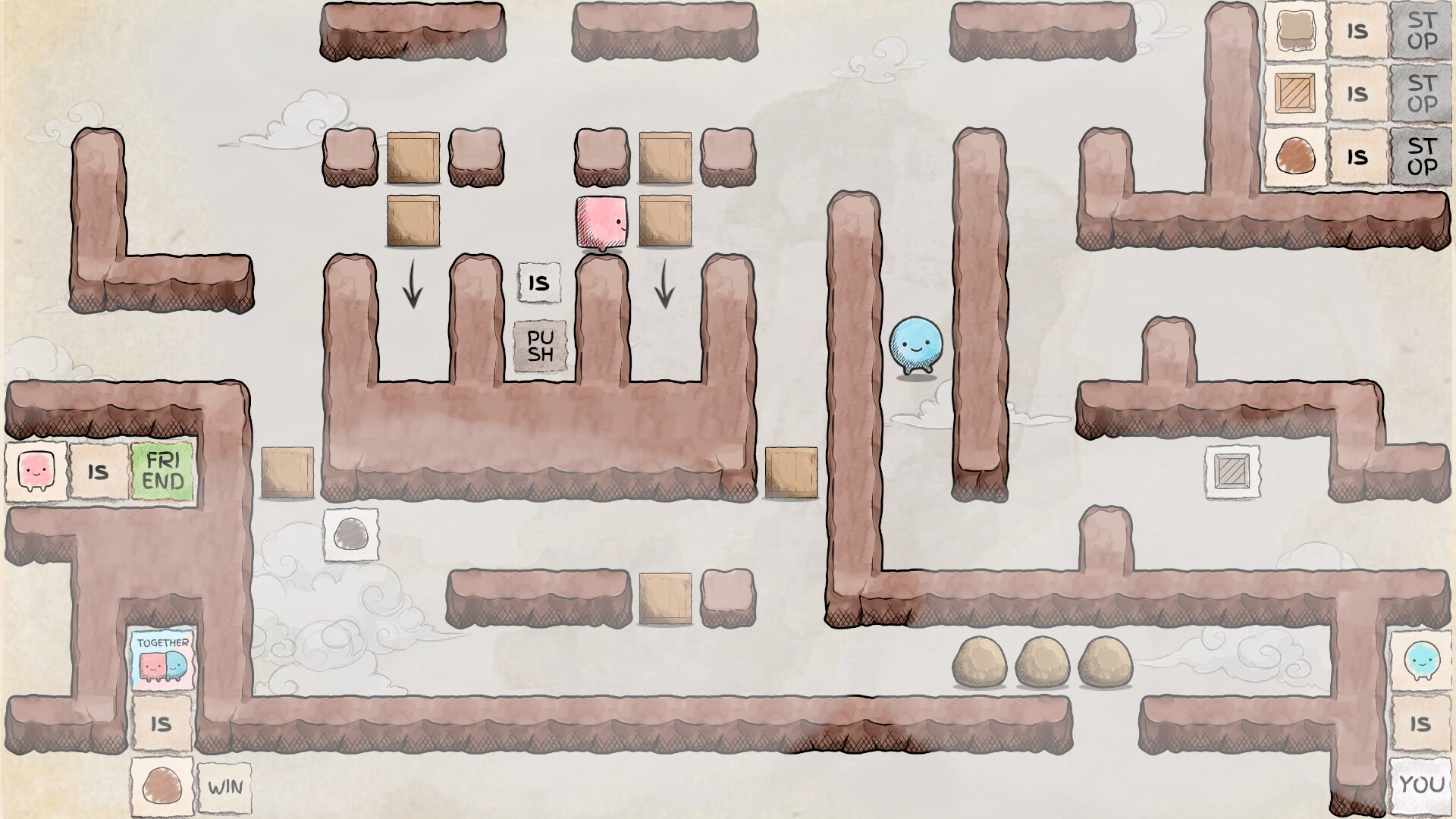
This difficulty hub ranks Me and You demo levels into S / A / B / C tiers so you can plan session length and expectations. Rankings weigh observed solve time from public playthroughs, how many simultaneous rule edits a pair must hold in working memory, and how often one player must become a temporary object. They are guidance—not a grade of your friendship. Always cross-check solutions on the Demo Walkthrough and refresh vocabulary on Rules and Word Blocks.
How we tier demo rooms
- S-tier: Long, multi-phase boards that punish silent play. Expect 10+ focused minutes even for experienced pairs.
- A-tier: Clear spikes that need a plan and role split, but with readable intermediate states.
- B-tier: Solid mid-demo challenges that teach new verbs or water interactions without marathon length.
- C-tier: Onboarding and early Chapter 1 rooms. Still co-op, but forgiving if you talk.
Tiers assume two engaged players on a stable connection or local screen. Solo attempts are outside scope—the design expects both bodies.
S-tier — schedule a long block
Water Thorns (Chapter 2)
Community playthroughs linger here longer than almost any other demo room. Water, thorns, and identity swaps stack until you must rewrite safety rules while both players stay mobile. Call every break of IS STOP before you commit. If voice chat drops mid-solve, pause.
Lock (Chapter 2)
Lock forces key/door logic through word rules instead of inventory menus. One wrong push strands a partner behind a new barrier. Treat it as a synchronization puzzle: decide who becomes the key-adjacent actor and who tends the sentence row.
Crossroads (Chapter 2)
Crossroads earns S-tier for branching routes and conflicting stop rules. Pairs often thrash until they name a single hypothesis out loud. Use a “one experiment at a time” rule—see Co-op Tips.
A-tier — expect a sweat, not a marathon
Water Castle / Out of Reach / You and Flag (Chapter 2 openers)
These introduce water adventure pressure without the full thorn stack. They are excellent warm-ups before the S-tier trio. If you bounce, revisit How to Play rather than brute-forcing twenty resets.
Changeless (Chapter 2)
The name warns you: some properties resist easy edits. Ranked A because the solution space feels narrower and invites overthinking. Write down which sentences are actually mutable before you panic-push.
We Are the Key for All / Two Banks of the River / Push It Together (late Chapter 2)
These late boards demand coordinated pushes across distance. Not always the longest timers, but easy to desync if Remote Play latency is high—prefer native online or local play.
B-tier — healthy mid-game practice
Maze / Is the Wall a Rock? / What Is This / Sink About It (late Chapter 1)
Chapter 1’s back half teaches transformation and sink logic. Great for practicing callouts. Keep them in B because failures are usually quick to reset and lessons transfer cleanly into Chapter 2.
Rockyard / I Am I
Identity jokes become identity tools. Ranked B for conceptual novelty more than raw length. If “I am I” confuses your partner, slow down and read every noun on the board aloud.
C-tier — Chapter 1 onboarding
The Flag Is Win / Rockfall / Teamwork / We Are Together
These rooms exist to prove that both players matter and that FLAG IS WIN is a physical sentence. Do not skip the talking habit here; bad silence starts early. Use them to validate Co-op Setup and Controls before you care about tiers.
Suggested session plans
- 45 minutes: Clear C-tier Chapter 1, stop on a win.
- 90 minutes: Finish Chapter 1 B-tier rooms, peek at first Chapter 2 A-tier.
- Long evening: Attempt Crossroads → Lock → Water Thorns with breaks between each S-tier room.
Wishlist the full game while the demo lessons are fresh—full release is November 25, 2026—and track new chapters later under Updates.
Using this hub without spoilers
Tiers name rooms and difficulty, not step lists. When you need moves, open the Demo Walkthrough. When sentences look alien, open Rules and Word Blocks. When the fight is social, not mechanical, open Co-op Tips.
Revisit rankings after launch if new demo builds shuffle order. Until then, treat S-tier Chapter 2 as the demo’s final exam and C-tier Chapter 1 as the syllabus.
Frequently Asked Questions
Quick answers to the most common questions.
Why are Water Thorns, Lock, and Crossroads ranked S-tier?
Public playthroughs show much longer solve times and denser rule interactions. They need planned callouts and often multiple coordinated identity changes.
Are early Chapter 1 levels actually easy?
They are easier relative to Chapter 2, but still require two players. Use them to practice talking, not to play silently.
Does this tier list spoil puzzle solutions?
No. It ranks difficulty and session planning only. Step-by-step help lives on the Demo Walkthrough page.
Should we skip S-tier rooms in the demo?
You can pause and return later, but they showcase what Me and You is about. Schedule a longer block instead of forcing them when tired.
Will the full game reuse this tier list?
We will expand rankings after November 25, 2026 when new chapters ship. Demo tiers remain useful for onboarding new partners.